How do I read my Bible? How do you read your Bible? How have others read the Bible in the past? Is there only one right way to read the Bible? If so, what is that right way? These kinds of questions have honestly perplexed me for the past several months. I'm learning more about how to read the Bible and I'm learning more about how others read the Bible. And I'm learning that most of us have room for improvement.
NT Wright has some excellent advice for reading the Bible in this video. And, his first answer to the question, "How do we read the Bible? Any thoughts? Any recommendations?" is most excellent. He responds, "Frequently and thoroughly."
After that clever yet profound response, Wright suggests that we read books straight through in one sitting rather than exclusively in 10 verse chunks. We need to read epistles in their entirety in one sitting. We need to read the gospels in their entirety at once. And not just that, we need to read them with an awareness of the whole sweep of Scripture.
The only time I have ever taught the book of Romans in a class, my first two or three lessons were spent talking about the entirety of the epistle. The assignment I gave the class was to read the entire letter in one sitting at least three times before we begin reading it paragraph by paragraph. I asked them to write down 5-10 main points in the letter after the third reading. Only after that did we begin looking at the text paragraph by paragraph, frequently reminding ourselves of the main themes. I implored the class NOT to consult a commentary until they had read the letter through at least three times. I was amazed by how much easier some passages in Romans were when there was a constant awareness of the overall theme of the epistle and the place in the overall Bible story that the letter occupied.
As NT Wright says in the video "The Whole Sweep of Scripture", we should view each small passage as a window through which we see the whole thing. Reading Scripture aloud is actually declaring the mighty works of God. Never lose sight of the whole sweep of the Bible.
Of course, reading small sections at a time is certainly an acceptable way to read the Bible. There are times when it is the only practical way to read it. But it can't be the only way we ever read the Bible if we want to truly understand it. When we do read those small sections, we must understand that small section is giving us a unique perspective on the whole story. Remember that in some way, that small section is declaring to us the mighty works of God, and the mightiest work of God was raising Jesus.
Far too often I have gotten caught up in a topic. What does the Bible teach about alcohol? Or, what does the Bible teach about pacifism? Or, what does the Bible teach about the roles of men and women? Or, what does the Bible teach about hell? Or, what does the Bible teach about grace? Etc. Then, when I'm researching that topic I break out my trusty concordance or search software. I find and read all the passages.
When I do that, I don't always give those verses their proper place in the whole sweep of Scripture. I usually find that several of those passages say quite different things. What I end up with is a bunch of patches that I'm trying to force together neatly into a garment. Usually the garment I make from the patches looks a lot like the garment I wanted to make before I found all the patches, except that it's a bit rough and irregular in spots. And I just ignore the irregular and rough spots. Let's pretend they're not there.
I've found that I've done a lot better when I find something in the course of reading large sections at a time. Then, I get the overall sense of what's going on, and when something stands out to me that I hadn't noticed before, I'm much more likely to get the sense of how it fits into the big picture. And I can learn something new that is consistent with the main themes of Scripture.
This video reminds me of some things I was taught by one of my favorite preachers, Bob Waldron. He greatly emphasized to me the importance of understanding that the Bible tells a story. Learning where characters and events fit into the story is essential to understanding any of the stories that tell the one big story. He developed a three cycle approach to learning and memorizing the Bible story that has helped me tremendously. I highly recommend that, and would love to help you learn this overall story and help you organize that knowledge.
How ever you read your Bible, whether in small chunks or large, do so remembering that it is a story. It's a story of love. It's a story of redemption. The main point of the Bible, both the Old Covenant and the New Covenant is Jesus. God longs for us to come to Him. He draws us to Him and shows us Himself through Jesus. Remember the mighty works of God.
Sunday, January 13, 2013
Tuesday, December 18, 2012
What Am I Reading?
I like to use the last couple of weeks of the year to look back and to look forward. I like to look back to see what I accomplished, if anything, worthwhile over the past year. I like to look back at my strengths and my weaknesses. I like to look forward to the new year to set goals. I like to think about how to improve my strengths and eliminate my weaknesses. I'm surprised by what I learn about myself each year.
Today, I was looking for a receipt for a watch that was supposed to be repaired under warranty, but that I got a bill for the repair. While looking for that receipt, I found several other receipts and I was quite surprised by what I found. I probably read more books this year than I have ever read in any year of my life.
Here are the books that I remember reading this year (the receipts helped me to remember), in no particular order. Just because I admit to reading a book doesn't mean that I recommend that you read it. Some of those books were a waste of my time. However, all of the running books were excellent if you're a runner. CS Lewis has some works that are better than others, but the two I read this year are among his best non-fiction. If you're interested in the conditionalist position about hell, nobody sets it forward more thoroughly than Edward Fudge. And I had to know what all the Katniss Everdeen fuss was about.
- The Hunger Games - Suzanne Collins
- Catching Fire - Suzanne Collins
- Mockingjay - Suzanne Collins
- The Last Lecture - Randy Pausch
- The Fire That Consumes - Edward Fudge
- Hell: A Final Word - Edward Fudge
- The Churches of Christ in the 20th Century: Homer Hailey's Personal Journey of Faith - David Edwin Harrel, Jr. (2nd time through)
- Change Agents and Churches of Christ - William Woodson
- Daniels' Running Formula - Jack Daniels (3rd time through)
- Advanced Marathoning - Peter Pfitzinger and Scott Douglas (maybe 4th time?)
- The Problem of Pain - CS Lewis
- Mere Christianity - CS Lewis (3rd time through)
- What Must the Church of Christ Do To Be Saved? - Leroy Garrett
- Piloting the Strait - Dave Miller (4th or 5th time through)
- Free As Sons - Cecil Hook
- Healthy Intelligent Training: The Proven Principles of Arthur Lydiard - Keith Livingstone
- How To Win Friends And Influence People - Dale Carnegie (I didn't get all the way through this book this year, but I have read this book every year for several years, except this year.)
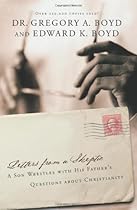
- Letters From a Skeptic - Dr. Gregory A. Boyd and Edward Boyd
- Surprised by Hope - NT Wright (I just started this one, but I will finish it before year's end.)
The best book I read this year is Letters From A Skeptic by Dr. Gregory A. Boyd and Edward Boyd. I would classify that as a "must read". I was both challenged and touched by that book. It's also very readable. Greg Boyd has earned my respect because he is not afraid of any question and he has an honesty that is very refreshing. I don't agree with a lot of his positions (especially his radical pacifism), but I respect him greatly.
What are you reading? What do you recommend for me for next year? Please leave comments with recommendations! Don't assume I've already read it! Strengths from my list.... Contrasting theological views, mostly good books. Weaknesses from my list... No science or technology books, no classic fiction. So, please, help me to improve for next year!
On my list for next year are these. Please add to the list. I'd love to get through 20 books next year.
- A Year of Biblical Womanhood - Rachel Held Evans
- The Abolition of Man - CS Lewis
- Walking by Faith - Roy Cogdill
- The Last Word - NT Wright
- Born to Run - Christopher McDougall (I know... How have I NOT read this yet?)
In addition to those books, I heavily emphasized my Bible Study in the Psalms, Gospels (especially John), and the books of Acts and Romans. I'd like to do more in the Old Testament next year. Also, I read most every article published by Eastside church of Christ in Athens, AL (private email list) and Pepper Road church of Christ (on their website) in Athens, AL. I also followed Patrick Mead's tentpegs blog and Greg Boyd's Reknew.org blog and recently added Rachel Held Evans instead of Al Maxey's Reflections (I just found Maxey's tone too vitriolic for my taste at times).
That's about all I have time for.
Tuesday, December 4, 2012
All or None
I ran across a well done piece by Rachel Held Evans a couple of days ago. She talks about 5 things you don't have to leave behind when you leave fundamentalism. It deals with some difficulties that someone may have breaking away from fundamentalism.
Sometimes, "fundamentalist" can be a pejorative term. I don't believe Ms. Evans uses "fundamentalist" this way, and I certainly am not using it in a negative way here. I am using the term to describe a strict, exclusive, uncompromising, conservative approach to interpreting the Bible. Though my religious background is fundamentalist, I no longer believe that a fundamentalist approach to interpreting the Bible is best. I have found the consequences to this change in approach very difficult. This is why I found Ms. Evans' post interesting.
And to be sure, I'm not physically "breaking away" from anything. I'm not leaving or even contemplating leaving church. I think that will be obvious as you read this. I'm describing a mindset change that I believe allows me to have a better understanding of Scripture and a stronger faith.
With this change in approach have come disagreements. When I have discussed these disagreements with people who take a fundamentalist approach, the most common response is to jump to the conclusion that I do not (or soon will not) believe in God or the Bible. This response has been nearly ubiquitous. For example, I have shared with a few people that I do not believe the Bible is a rule book, instruction manual, or blueprint. Here are some responses I've gotten when I've revealed this change in approach to the Bible...
- If you approach the Bible this way, you will eventually believe that it has no authority. You will even reject direct commandments.
- You must not believe that the Bible is inspired.
- Do you now believe that any religion is ok? Muslims, Hindus, and even atheists?
- Do you no longer think that homosexuality sinful?
- You just want the Bible to say whatever you want it to say. Do you even believe in God anymore?
This is just a sample of the radical responses that I have gotten. I'm baffled. I've often asked myself, "Why would they think this about me?" I really don't know the answer to that question, but I believe it's related to an "all or none" mindset (Either you agree with all of what we teach or you agree with none of what we teach; you are either right or wrong.) that I am sometimes still guilty of.
To be fair to those who have reacted this way, many people do leave fundamentalism and go to an extreme counter position of atheism or agnosticism or some self-destructive pattern of behavior (addiction, idolization of pleasure, etc.). So, their concern for me is not altogether irrational and I appreciate it, even if it hurts at times. Without the community of God helping me out, who knows whether I would have run to one of those other extremes.
Some people seem to be concerned that I don't believe in Jesus or the Bible any more, that I don't believe in church any more, that I don't believe in restraint any more. To clear the air, using Rachel's excellent post as a guide, here are my thoughts on her 5 things that I haven't left behind.
- I believe the Bible is inspired by God. Just because I don't believe it's a technical "how-to" document doesn't mean that I disregard it or reject it. I study it harder now than I ever have in my life. I find myself engrossed in its stories. I see God's love on every page. I now take the whole thing and not just the few proof texts that I had memorized. I still have those proof texts stored away in my heart, but I read them afresh and in their context and through the lens of Jesus crucified. Some things I understand better than ever and other things I'm more confused about than ever. Sometimes it makes me joyful and sometimes it comforts me and sometimes it makes me afraid and sometimes it frustrates me and sometimes it makes me angry. But it always fills me with awe. I'm challenged every time I open my Bible app or leather bound book. I love reading the Bible because it teaches me about God.
- I believe that the church reveals God's wisdom. I don't believe that worship begins and ends when the church is assembled and dismissed. I don't believe that there is a specific order of events or a specific set of acts that must be performed as part of worship. And sometimes, I admit, I'd rather stay in bed. But I believe it is necessary for my spiritual survival to join and work with God's community. I don't agree with every doctrinal position taught at church. I don't like every sermon or Bible class. I'm not a member of a perfect church, but I'm a member of a good church. There are people there (myself included) who are suffering and some of that suffering is self-induced. And we need one another to show compassion and love. And I love every single person there. I fit right in with my own brokenness and weaknesses. We are all working together with God toward fixing and strengthening one another. I love my church (I consider them my family.) and can't fathom leaving them. I need them.
- (I'm combining Rachel's 3 and 5 into one point here.) I believe that God calls us to be disciplined and holy. I strive to pray, study, and sacrifice more. I strive to avoid profane and filthy things and live a life that is moral and holy. There are restrictions on our behavior and there are things that we must actively do. What I've found, though, is that the specific rules that we've made don't truly make us holy or moral. Rather, they serve to give us man-made standards that we can use to judge the discipline and holiness of other Christians. I don't consider myself a better Christian than any other Christian. And I don't want any part of that type of thinking any more. I want to pursue these things from love rather than from fear and guilt.
- I have lost friendships over these disagreements. I miss the friends that I have lost and long for their approval again, but I'm not sure their approval is possible unless I return to a fundamentalist mindset. I don't believe that would be true to myself or to true to God. Other friendships have been changed. I have many friends with whom I disagree and I strive to maintain those friendships. I don't want agreement on biblical issues to be a condition for friendship. It's good for me to learn to exercise the patience and kindness and discernment that I believe is necessary to preserve friendships in the presence of disagreements. Ms. Evans speaks truth. If you abandon the fundamentalist mindset, you will lose some friendships and other friendships will change. I've found this to be the hardest part, but as she says, I don't want to leave the friendships behind.
I pray that I cling to and pursue Scripture, community, discipline, friendships and holiness, more like Him.
Tuesday, November 13, 2012
The Worst Sin
In my last post, I wrote about "deal breaker sins" and the story of David and Bathsheba. That post is background for this one. The summary of that post is this: There are sins, whether we like to admit it or not, that we consider "deal breakers", sins like homosexuality, adultery, murder, illegal drug use, abortion, etc. But... If I have the same evil desires that David (or anyone guilty of a deal breaker) has, then why do I think my sins are not as bad as his? Can we classify sin at all? If we can classify sin, what is the worst sin of all?
I've heard and I've believed and taught that all sin is sin is equal. When I believed that, instinctively and intuitively, it just didn't seem right. Also, the fact that most consider "deal breakers" to be really bad indicates that this belief isn't really easy to accept. I know that my instincts and intuition and behavior are not standards for truth. However, when something clearly violates these, it does give me reason to pause, consider, and re-examine. I've discovered that sins are not equal. It's obvious to most anyone that all sins are not equal in terms of consequences and in terms of their effect on other people. So, I won't deal with those two senses of inequality in this post. This post will focus on what the Bible says and what Jesus taught about the inequality of sins.
So what does the Bible say? Are some sins worse than others? Let's begin by establishing that Jesus does, at least once, point out that not all sins are equal. Pilate had freed a guilty murdering, thieving rebel named Barabbas (Mark 15:7; John 18:40) . Then, he brutally beat an innocent Man nearly to death (John 19:1). After this, Pilate is demanding an answer from this bloody, bruised, humiliated, dying Man and threatens Him with his power. Jesus replies, "You could have no power at all against Me unless it had been given you from above. Therefore the one who delivered Me to you has the greater sin." (John 19:11)
From this passage, it seems reasonable to conclude that not all sins are equal. Judas (or Caiaphas, not sure which is being referred to here) had a greater sin than Pilate. If the sin of handing Jesus over was greater than Pilate's abuse of power, cowardice, brutal beating, and murder, then the sins that are most repulsive to me may not be the greatest sins.
When you couple this statement of Jesus with His statements that it will be more tolerable for Tyre, Sidon, and Sodom in the judgment than it would be for Bethsaida, Chorazin, and Capernaum (Matt. 11:21-24), it seems that even the punishment for some sins is more severe. Seem impossible? Then what is the point of Hebrews 10:29? Some sins deserve and will receive a more severe punishment. Consider also Lamentations 4:6. Some translations say "the punishment for the iniquity of ... my people ... is greater than the punishment of Sodom". Others say "the iniquity of ... my people ... is greater than the sin of Sodom". I can't make sense of all of these verses without concluding that some sins are greater than others.
Having looked at some passages that deal directly with this, let's now approach this logically. A few months ago, I wrote about weightier matters of the law. Logically, if some parts of the law are weightier than other parts of the law (Matthew 23:23), does it not follow that violating the weightier commandments is worse than violating the ones that are less weighty? Please don't misunderstand. I'm not suggesting that we can ignore the less weighty matters. I'm not suggesting that any sin is "not so bad". Just as all of God's word is pure and right, all sin is corrupt and wrong and evil. But, just as not all of Scripture is equal, not all sins are equal. I think I've more or less known deep down all along that they're not equal, but I've classified them all wrong. What are really the greater sins?
What are the weightier matters according to Matthew 23:23? Faith, justice, and mercy. What do those have in common? They are heart based virtues. They are qualities that are cultivated inwardly and are not easily observable or measurable. What are the two greatest commandments? Love God and love your fellow man. If these are the greatest commandments and sin is disobedience, then does it not follow that the greatest sins are to disobey these greatest commandments? To lack love, faith, mercy, and justice?
Following Christ is a matter of the heart. This is the essence of "I desire mercy and not sacrifice." Following Christ isn't about prettying up the outside. It isn't about just avoiding the deal breakers. It isn't about obeying laws for the sake of obeying laws. It's about cultivating virtues in your heart. It's about allowing Christ to dwell in you and take away your evil, selfish desires and to replace them with perfect graceful character traits. It's about cultivating those virtues to maturity. It seems to me that this is the point Jesus is making in the Sermon on the Mount in Matthew 5:21-48. Rather than simply avoiding murder, you should avoid anger and keep vengeance out of your heart. Rather than simply avoiding fornication, you should remove lust from your heart. Rather than loving only your neighbors, love everyone, including your enemies. Following Christ is a radical inward change.
Still in the Sermon on the Mount, Jesus uses hyperbole to show that some sins are greater. In Matthew 7:1-5, He talks about a splinter and a beam. If I'm right about what I've written in these two posts, then this would imply that correcting others faults in a merciless, unjust, unloving way is exactly what Jesus was talking about here. Having evil desires, lust, pride, laziness, injustice, being unloving, being unkind, being unmerciful, those are beams. I admittedly have beams in my eye. When I'm perfect in my faith, mercy, justice, and love, when I have conquered laziness, lust, and pride, then I'll feel like I'm qualified to judge others. Until then, I'll follow Jesus instruction to "Judge not." Right now, I'm too busy working with Christ to remove my beams to be picking at splinters in others' eyes. God alone is judge.
I have seen and participated in my share of unloving judgment and condemnation of others. If the greatest commandment is to love, then it follows that the worst sin is to withhold love. Who is the worse sinner, the murderer, homosexual, adulterer, addict, etc. or the one who hates the murderer, homosexual, adulterer, addict, etc.? When I shun and avoid and berate and gossip about and slander those who are struggling with sin, when I fail to show them the love of Christ (Christ who loves me and reaches out to me while I am a sinner), I am guilty of the worst sin, even worse than the deal breakers.
To be clear, if you interpret these posts to mean that I believe that murder, homosexuality, adultery, etc. are NOT sinful or are not so bad, then I have failed miserably to communicate my message. Those are sins. Period. However, withholding love is a greater sin than any of those. I pray that I will learn to show love to the guilty, more like Him.
Saturday, November 3, 2012
Deal Breaker Sins
If you think for a moment, you probably can come up with a list of what many consider, but nobody calls, "deal breaker" sins. Your list is probably similar to my list. Deal breakers are the sins that one absolutely must avoid to be accepted by most Christians. Here's my partial list: homosexuality, adultery, murder, abortion, illegal drug use, etc. Congratulations to me. I'm avoiding the deal breakers.
To be sure, I've always heard and even repeated that a sin is a sin is a sin, but I have been guilty of practically categorizing sins while claiming to believe that they are equal. Oh, I'd never admit it, but I sure categorized them in my mind something like this... The deal breakers are really bad. The ones I'm guilty of are not so bad; they're just weaknesses. (I now believe and admit to believing that sins have different weights. More on this later.) I certainly want to press for the ideal of having no sins, but I am weak and stubborn and proud and end up sinning again and again. Somehow, though, I'm avoiding the deal breakers. I need desperately to realize that I'm avoiding these deal breakers by God's grace, not by myself.
I've never said this out loud, but if I'm honest with myself, I've thought it. Avoiding those deal breakers must make me a better person than someone who commits the deal breakers, right? Again, I never would have said or written that. Has it ever crossed your mind that you're a better person than a homosexual or a better person than a drug addict? And, a murderer? Surely I'm a better person than a murderer, right? Am I the only one who has thought with hubris and righteous indignation when I hear that a man has cheated on his wife, "How could he do something like that?"
Then, it hit me square in the nose and I said it out loud to my wife, "I'm not a better person than David." David committed two of the deal breakers on my list. Please read 2 Samuel 11. How did David, such a good man and king, such a talented musician, such a respectful servant to King Saul, such a valiant warrior, such a great poet, such a faithful young man, such a loyal friend to Jonathan... How did David, a man with so many virtues, fall to the point of committing these deal breakers?
When I look carefully at this story and carefully at myself, I realize that I'm not above committing a deal breaker. I have the same evil desires in me that David had in him that led to his great fall. Look briefly at what led to David's fall.
- Laziness. Why did David stay in Jerusalem while Joab and his army went to fight? (2 Sam. 11:1) Perhaps I'm reading too much into this next verse, but why is David just getting out of bed in the evening? (2 Sam. 11:2) Has he been in bed all day or was he taking a nap?
- Lust. David, it seems, was walking about looking for something to fill his idle time when he saw Bathsheba. I don't see anything in the text that indicts or exonerates Bathsheba. Her role could have been anywhere from seductress to rape victim. The text does not say. The Bible presents this as David's sin, so let's focus on that. David inquired, sent for her, and took her (2 Sam. 11:3-4). He indulged his desire.
- Pride. Most of 2 Samuel 11 is telling of David trying to cover up his sin. David will stop at nothing to preserve his righteous appearance. He misrepresents the reason for Uriah's visit. (To report about the war?) He gets Uriah drunk. Then, he murders Uriah. This dishonesty, drunkenness, and murder were all attempts to cover up his sin, to avoid shame.
I confess that I have not yet conquered laziness, lust, and pride. In fact, I struggle with each of those most every day, among several other evil desires. The difference between me and David (or me and any adulterer or murderer) is that my evil desires manifest themselves in other ways that aren't deal breakers.
I'm tempted by laziness every day. Sometimes I'm distracted at work. Sometimes I look for shortcuts or plagiarize. I sometimes neglect to help those in need because it requires work. I indulge in too much TV. I sit idly far too often. I even seek idle time. Choosing idle time over productive time was the beginning of David's fall.
We live in a sex-obsessed society that glorifies lust. We don't have to look for things to incite these desires; they find us. We will confront strong desires for the forbidden, and this isn't limited only to sexual desires. It happens to everyone. The desire for the forbidden is one of our enemy's strongest and oldest weapons (Genesis 3:6). It seems very dangerous to me to think that I have it conquered or that I can legislate away a desire for the forbidden. Most every day I notice things that are desirable, but that I shouldn't have. And those desires are both dangerous and strong. David was enticed by the forbidden, even though (or maybe exactly because) he knew it was forbidden.
Over and over I struggle with pride. Even my near automatic categorization of others' sins is ugly pride. My sins are weaknesses. Others' sins are deal breakers. How often do I paint myself white after a mistake? How often do I say something hurtful and then try to soften it by saying "I didn't mean it that way?" How often do I avoid apologizing? I want people to like me and think I'm good, and sometimes, my desire to make myself look good ends up in harm to someone else. David was willing to harm and even kill Uriah to avoid looking bad.
I hope my description of my own struggles with the same evil desires David had was foreign to every reader, but I suspect it was not. I have every one of those evil desires that David had, and I believe that David was a better man than I am. So why are my sins not as bad as his? The key difference between me and David is that my desires aren't manifesting themselves in the form of deal breakers. So, that brings me to the questions I want to ask. Are my sins really not that bad? Are others' sins really worse than mine? Can sins be categorized? If so, what is the worst sin?
Stay tuned. I'll look more into those questions in the next post.
Thursday, October 18, 2012
My God Isn't Like That
These thoughts have been rolling in my head in some form for quite some time. And I'm honestly a little afraid to post this because it brings up some ugly truths. But a friend of mine posted on Facebook about fear recently, quoting 2 Timothy 1:7. Now, I'm not sure that this kind of thing is exactly what Paul was talking about when he wrote those words to Timothy. I think Paul was more saying, "Never be afraid or ashamed to tell the death and resurrection story of Jesus. Never be afraid of what men may do to you for showing them the grace of God."
On second thought, maybe Paul's words do apply a little, because I want to relate a conversation that I heard recently to the grace of God and the death and resurrection story. It involves some tough questions that I don't know how to answer and that may make some people (myself included) uncomfortable or even angry to consider. But I'll try not to be afraid.
Recently, I was talking to a couple of other Christians about the story of the Taliban shooting a 14 year old Pakistani girl in the head. You can google the story, but here's at least one article about it. Thankfully, she is progressing and has the potential to make a full recovery. Obviously, we were horrified, disgusted, even outraged. What a senseless, merciless, disgusting, cowardly, evil act done in the name of God. One of the Christians said, "They say that we serve the same God, but the God I serve doesn't ask someone to do something like that, to try to kill a defenseless girl. Their god is not like my God." A response to that statement was to consider Deuteronomy 2:33-34, 20:10-20; and 1 Samuel 15:1-3. We all were quick to acknowledge that Christians have some explaining to do. Both of them had thought this through more thoroughly than I have. They shed some light on the subject for me.
And, this conversation reminded me: Let's not be so quick to condemn another's religion because we don't like what some of its adherents say their god says. Do we Christians want to be judged by that same standard? I don't want people judging me because of the crusades or Charlie Fuqua or Westboro Baptist or the International churches of Christ. When talking to a Muslim, let's not typecast that person as a member of the Taliban.
And let's be honest about our own religion. In our Holy Book, on more than one occasion, Hebrew people attribute to God the commandment to slaughter women (I assume even pregnant women) and children, even babies and toddlers. Let's not pretend that Christianity doesn't have difficult questions. History, not the Bible, but secular history, tells us of people committing genocide in the name of Christianity during the crusades. Let's not pretend that we're such a holy religion because our religion, and its predecessor, Judaism, has always been sweet and non-violent. History and even our inspired Holy Bible tell a different story. What good do we do to ridicule or dismiss someone's belief system? Sure, disgust is the proper response to the actions of the Taliban and Westboro Baptist. However, we shouldn't think all Muslims are terrorists any more than we should think that all Christians are like the protesters from Westboro.
Also, we may ridicule mythology or paganism because we consider their stories ridiculous or fantastic, yet shortly after our Holy Story begins, we have a woman talking to a snake. A few chapters later, we have God commanding a human sacrifice and then reneging on the command. The same author tells us later that a donkey talked to a man. The Bible tells of the sun standing still, a floating ax head, leprosy being given and cured by the same person, water turning to wine, and people raising from the dead. Call me primitive or silly, but I believe all of that happened.
We may ridicule radical Islam as a violent religion (and it is) or liberal environmentalists for elevating plant life and devaluing human life (and they do). But our Holy Bible tells of a people who, at the commandment of God, raided a land, killed the men, women, and children but spared the trees. As a Christian, I don't do anyone (myself included) any favors to ridicule others while pretending that I don't have difficult questions to answer. I do. And ridiculing and judging other religions (or even other Christian groups) is not the right way to proceed.
I believe all of the following things.
When I talk to a Hindu or a Muslim or a pagan or an atheist or an agnostic, I don't think I should start with an attack on their religion or lack of religion, which would likely lead to a counter attack and a requirement to reconcile these things and get into questions that are difficult to answer and may end in fruitless disputes. Christianity is not a bloodless religion that has simple answers to life's tough questions and is condescending to all other people. I won't win people to Christ by treating Christianity that way. There is one huge thing that makes Christianity different. We have a Savior who really lived and died and raised from the dead. We can confirm that fact with history.
When talking to those who are not Christians, I should start with a story. It's a story confirmed by history and archaeology and other reliable sources, including written eyewitness testimony, changed lives, and the Bible. It's a story of a Man who showed pure, sacrificial love in every aspect of His life and death. A story of a Man full of grace. A story of forgiveness both for and by those who follow this Man. A story of a Man who begged for His enemies' forgiveness while they tortured Him to death. A story of a Man who raised from the dead and lives and promised that all who follow Him will also raise from the grave and live. That story is what makes being a Christian special and holy. Muslims, Hindus, atheists, and even Christians need to hear that story and see that grace in me and in you. Christianity isn't a religion about finding every answer and attaining perfect knowledge and understanding and the self-righteousness that would inevitably follow. Christianity is a relationship with a risen Savior and service to others.
I'm impressed with Paul in Acts 23 through Acts 27. Over and over, he showed grace and he respectfully told the resurrection story. He talked about resurrection. A lot. Paul's message in those chapters was basically, "Jesus rose from the dead. He made a radical difference in my life. He'll make a radical difference in your life, too."
That's the Gospel story. And I pray that I can respectfully share it with as many people as possible so that we all can be made more like Him, including the resurrection He promised.
On second thought, maybe Paul's words do apply a little, because I want to relate a conversation that I heard recently to the grace of God and the death and resurrection story. It involves some tough questions that I don't know how to answer and that may make some people (myself included) uncomfortable or even angry to consider. But I'll try not to be afraid.
Recently, I was talking to a couple of other Christians about the story of the Taliban shooting a 14 year old Pakistani girl in the head. You can google the story, but here's at least one article about it. Thankfully, she is progressing and has the potential to make a full recovery. Obviously, we were horrified, disgusted, even outraged. What a senseless, merciless, disgusting, cowardly, evil act done in the name of God. One of the Christians said, "They say that we serve the same God, but the God I serve doesn't ask someone to do something like that, to try to kill a defenseless girl. Their god is not like my God." A response to that statement was to consider Deuteronomy 2:33-34, 20:10-20; and 1 Samuel 15:1-3. We all were quick to acknowledge that Christians have some explaining to do. Both of them had thought this through more thoroughly than I have. They shed some light on the subject for me.
And, this conversation reminded me: Let's not be so quick to condemn another's religion because we don't like what some of its adherents say their god says. Do we Christians want to be judged by that same standard? I don't want people judging me because of the crusades or Charlie Fuqua or Westboro Baptist or the International churches of Christ. When talking to a Muslim, let's not typecast that person as a member of the Taliban.
And let's be honest about our own religion. In our Holy Book, on more than one occasion, Hebrew people attribute to God the commandment to slaughter women (I assume even pregnant women) and children, even babies and toddlers. Let's not pretend that Christianity doesn't have difficult questions. History, not the Bible, but secular history, tells us of people committing genocide in the name of Christianity during the crusades. Let's not pretend that we're such a holy religion because our religion, and its predecessor, Judaism, has always been sweet and non-violent. History and even our inspired Holy Bible tell a different story. What good do we do to ridicule or dismiss someone's belief system? Sure, disgust is the proper response to the actions of the Taliban and Westboro Baptist. However, we shouldn't think all Muslims are terrorists any more than we should think that all Christians are like the protesters from Westboro.
Also, we may ridicule mythology or paganism because we consider their stories ridiculous or fantastic, yet shortly after our Holy Story begins, we have a woman talking to a snake. A few chapters later, we have God commanding a human sacrifice and then reneging on the command. The same author tells us later that a donkey talked to a man. The Bible tells of the sun standing still, a floating ax head, leprosy being given and cured by the same person, water turning to wine, and people raising from the dead. Call me primitive or silly, but I believe all of that happened.
We may ridicule radical Islam as a violent religion (and it is) or liberal environmentalists for elevating plant life and devaluing human life (and they do). But our Holy Bible tells of a people who, at the commandment of God, raided a land, killed the men, women, and children but spared the trees. As a Christian, I don't do anyone (myself included) any favors to ridicule others while pretending that I don't have difficult questions to answer. I do. And ridiculing and judging other religions (or even other Christian groups) is not the right way to proceed.
I believe all of the following things.
- Jesus is raised and is God's only Son and He is the exact representation of God's essence.
- The Holy Bible is inspired by God.
- God cannot do or command evil.
- It is evil to kill innocent men, women, children, and babies.
When I talk to a Hindu or a Muslim or a pagan or an atheist or an agnostic, I don't think I should start with an attack on their religion or lack of religion, which would likely lead to a counter attack and a requirement to reconcile these things and get into questions that are difficult to answer and may end in fruitless disputes. Christianity is not a bloodless religion that has simple answers to life's tough questions and is condescending to all other people. I won't win people to Christ by treating Christianity that way. There is one huge thing that makes Christianity different. We have a Savior who really lived and died and raised from the dead. We can confirm that fact with history.
When talking to those who are not Christians, I should start with a story. It's a story confirmed by history and archaeology and other reliable sources, including written eyewitness testimony, changed lives, and the Bible. It's a story of a Man who showed pure, sacrificial love in every aspect of His life and death. A story of a Man full of grace. A story of forgiveness both for and by those who follow this Man. A story of a Man who begged for His enemies' forgiveness while they tortured Him to death. A story of a Man who raised from the dead and lives and promised that all who follow Him will also raise from the grave and live. That story is what makes being a Christian special and holy. Muslims, Hindus, atheists, and even Christians need to hear that story and see that grace in me and in you. Christianity isn't a religion about finding every answer and attaining perfect knowledge and understanding and the self-righteousness that would inevitably follow. Christianity is a relationship with a risen Savior and service to others.
I'm impressed with Paul in Acts 23 through Acts 27. Over and over, he showed grace and he respectfully told the resurrection story. He talked about resurrection. A lot. Paul's message in those chapters was basically, "Jesus rose from the dead. He made a radical difference in my life. He'll make a radical difference in your life, too."
That's the Gospel story. And I pray that I can respectfully share it with as many people as possible so that we all can be made more like Him, including the resurrection He promised.
Wednesday, October 3, 2012
Principles and Rules
Rules can be easy to follow. Principles can be difficult to apply. About the New Testament I've asked myself, "Is it a collection of rules or a collection of literature that contains principles?" By and large, it seems that the latter is true. Consider the literature types in the New Testament. There are four biographies of Jesus, one book of the history of the early community of believers, a collection of letters (some addressed to collective groups of Christians and others addressed to individuals), and a book of prophecy. None of those are technical how-to books or legal documents. Given the type of literature God inspired and preserved for us, it seems more reasonable to conclude that He gave us principles to show us what is good rather than a set of arbitrary rules.
Sometimes, situations arise where the right thing to do is not crystal clear. Sometimes there are rules that come into conflict for a variety of reasons, whether it be timing, an emergency, historical and cultural context, or some other chance occurrence. Jesus deals with a situation like this with the Old Testament law in John 7, especially verses 16-24. The Law of Moses commanded circumcision on the 8th day for male children. The Law of Moses also commanded rest on the Sabbath. So, what do we do with a male child who turns 8 days old on the Sabbath? It's not crystal clear. Jewish rabbis and Jewish tradition held that you were to circumcise a child on the Sabbath if he were 8 days old that day. Jesus seems to approve of this interpretation. (Maybe not, it's hard for me to tell from John 7. He doesn't seem to condemn this interpretation, at least.) In showing that His healing on the Sabbath did not violate the law, He points to this accepted interpretation of the law of Moses. Then, He says to the Jews in verse 24, "Judge not according to appearance, but judge righteous judgment."
It seems that Jesus is saying here, "Don't judge so quickly. Dig a little deeper. Consider the overall teaching of God's word and the whole situation and then decide what is right." In healing, Jesus was showing mercy and love, great principles that outweigh the command to rest on the Sabbath. (See also Matthew 12:1-14.) The Jews' judgment of Him wasn't based on righteousness and the principles of God's word. It was rooted in their desire to condemn and kill Jesus (John 7:1, 19).
What's our lesson from this? I've used, and heard others use, John 7:24 as a justification for condemning people who disagree with me. However, it seems that is the opposite of what Jesus was actually saying. Jesus isn't giving the Pharisees license to condemn others. Rather, He is teaching them to refrain from condemning others and to be innocent and holy in their discernment. The Pharisees' problem was their desire to condemn and kill Jesus. That's why they judged Him. They were looking for any misstep. Any excuse would do. When I used John 7:24 to justify condemning others, I didn't realize that Jesus was actually correcting the Pharisees for their desire to condemn Him.
You see, the problem here was the Pharisees' desire to condemn. They were not acting from love, the greatest principle in the law. While they likely believed they were doing God's work, they hated Jesus. In their zeal to condemn those who disagreed with their rules, they incorrectly condemned Jesus under the guise of protecting and upholding rules, rules that they believed were from God. However, in their protecting of these rules, they had neglected the principles of God's word.
A passage that comes to mind here is Galatians 5:22-23. "But the fruit of the Spirit is love, joy, peace, longsuffering, gentleness, goodness, faith, meekness, temperance: against such there is no law." Remember, it is never wrong to love, to seek peace, to be patient, etc. There is no law that can stand against these great principles in God's word. In this same chapter, verse 14, Paul says that the entire law is fulfilled in love. Love selflessly and you will not break any of God's rules. Seek to condemn, as the Pharisees did, and you are likely to misapply God's word.
I pray that I can do everything from love, more like Him.
Subscribe to:
Posts (Atom)